ΟΔΥΣΣΕΙΑ
What Is the Odyssey?
A homecoming story told for nearly three thousand years
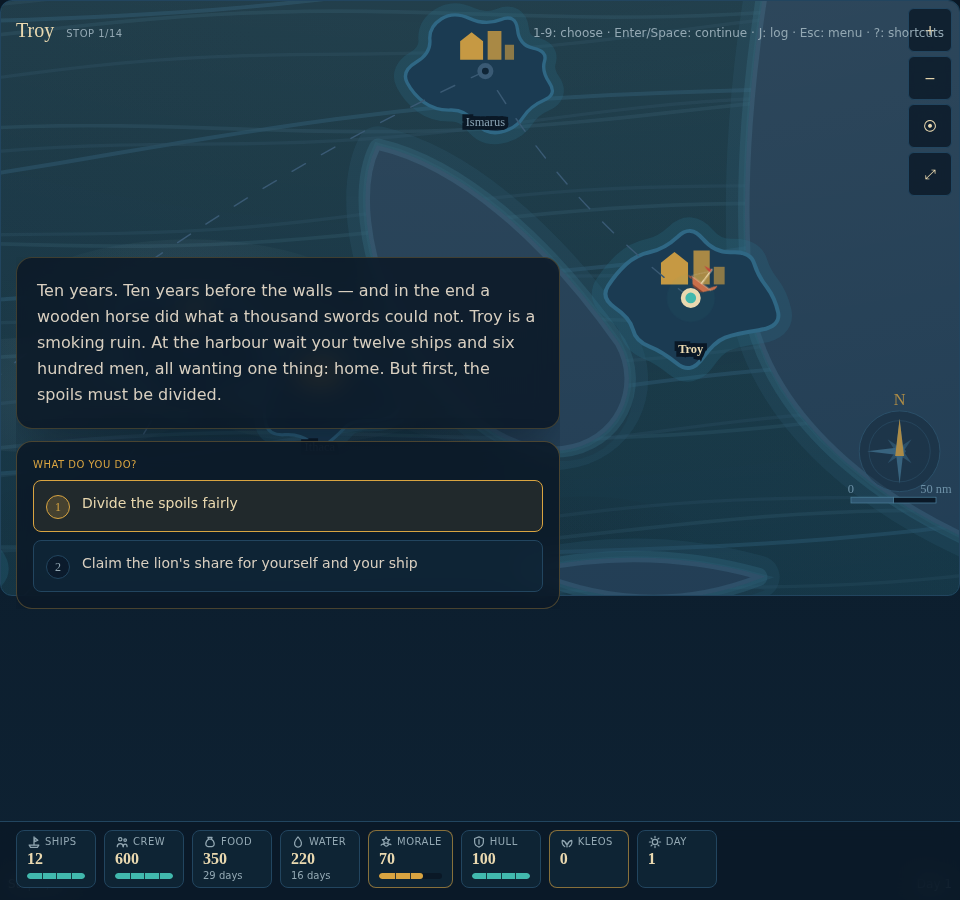
The epic
The Odyssey — together with the Iliad — stands at the very beginning of Western literature: an oral-tradition epic of 24 books and roughly twelve thousand lines. It is thought to have reached its present shape around the 8th century BC, and since antiquity it has been attributed to a poet called Homer — though most scholars agree the text is the matured form of an anonymous folk narrative, sung and passed down for generations. Wandering bards kept it alive for centuries at feasts, festivals and contests.
The story
Ten years have passed since the Trojan War ended; every surviving hero has reached home except Odysseus, king of Ithaca. The epic advances on three fronts: on Ithaca his son Telemachus sets out to find his father while suitors besiege his mother Penelope; Odysseus escapes seven years of captivity on the goddess Calypso’s island, is cast by storm onto the Phaeacian shore, and at the king’s table tells his nine-year adventure — from the Cyclops to the Sirens — in his own words.
In the final books he slips into his own house disguised as a beggar, strings the bow no one else can bend, and clears his home of the suitors. Penelope’s last test — the secret of a bed carved from a living olive tree — closes twenty years of waiting.
Themes
At the heart of the epic lies nostos — the longing for homecoming — joined by kleos (glory), xenia (the sacred law of hospitality), and the endless duel of wit against brute force. What makes Odysseus immortal is not his sword arm but his “many-turning” (polytropos) mind: the wooden horse, the “Nobody” trick and the idea of being tied to the mast are all products of the same intelligence.
An anonymous work: no copyright, open to everyone
The Odyssey is nearly three thousand years old and belongs to the shared heritage of world literature: no copyright of any kind exists on the epic itself. This game is built directly on that public-domain ancient narrative — it uses no text, imagery or design from any particular modern translation, film or series; every line of narrative on this site was written originally for the game. (Individual translations and adaptations carry their translators’ and producers’ own rights; the epic itself belongs to everyone.)
In books and on screen
The epic has been translated into every major language many times over, and film and television keep returning to it; most recently, a big-budget adaptation directed by Christopher Nolan reached cinemas in 2026 (The Odyssey — IMDb). This game has no connection to any of those productions: our only source is the ancient epic itself.
▶ Play the Game Free
Runs in your browser · no install · no sign-up · in English
Odyssey map: the 14 stops · Odyssey gods and monsters · Odyssey achievements and badges